- Welcome to SAAC Forum.

News:
SAAC Member Badges are NOW available. Make your request through https://saac.wildapricot.org to validate membership.
This section allows you to view all posts made by this member. Note that you can only see posts made in areas you currently have access to.
#1
Concours Talk / Re: 427 AC Cobra
September 03, 2026, 06:03:39 PM #2
Concours Talk / Re: 427 AC Cobra
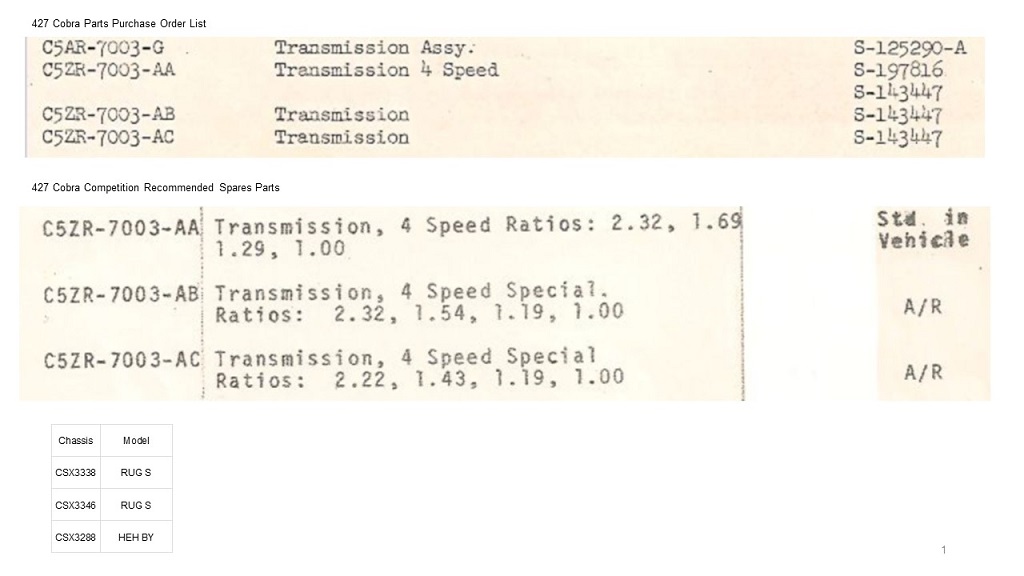
September 03, 2026, 05:49:49 PMQuote from: kasearch@ix.netcom.com on September 03, 2026, 02:58:14 PMThanks Dan. But I am more interested in what TAG code would be on the case of a 66, 67, or 68 427 car. As I mentioned according to David Kee's, the 65 tag would be HEH-BY. What would the other years show?
The only tag codes I know of were by inspection for unrestored nice cars, CSX3338, CSX3346, and CSX3288 as shown in my reply. I have the original hard copy purchase order list Shelby American used for 427 Cobra components, see the Ford engineering numbers in the post. To Shelby American 1965 Cobras were CSX2xxx cars sold after September 1, 1964. The CSX3xxx cars were mostly named 1966 Cobra or 1967 Cobra based more when they were sold than when completed. CSX3042 was remarked and titled as a 1967 model for example.
The transmissions in my post are what Shelby American purchased to use in street and competition "427 Cobras". I do not have a cross reference to 'tag' codes. The only letter I can read on CSX3173's original tag is the last one "Y"; a 1966 Cobra. To Shelby American there were just 1966 and 1967 model years for CSX3xxx cars.
#4
CSX 2000 Series / Re: 289 Mufflers
June 07, 2026, 10:41:41 AM
I have a slide show covering original equipment exhaust systems; there was not just one version of pipe sets and mufflers. It might help you decide what you want.
Dan
Dan
#5
Concours Talk / Re: Hipo heads irregularity
May 15, 2026, 03:42:39 PMQuote from: pbf777 on May 15, 2026, 01:15:06 PMAnd this leads me to the inquiry of the cylinder head numbers I provided, this being of: "3D18" & "3D24" and with the fact that they as stated: "'do not' have casting provisions for the passage nor the plug/bunghole machining", my "first knee-jerk reaction" was that these were of 1973 casting production, but without the casting provisions for thermacter plumping, could these possibly be actually of 1963 production? If so, it seems they would prove to have been awfully early "289 H.P." stuff.
Scott.
HP289 pieces. The majority of 1963-64 model year engines had cylinder head assemblies that were based the C3OE-E and C3OE-F versions of cylinder head castings; machined as 1963-64 model year specification pieces. The C4OE-B head casting was introduced about April 1964 for 1964 engines near the end of the 1964 model year. C5OE-A head castings made it into "1964" HP289 engines the last few weeks of the 1964 engine model year for some of the last regular production five bolt bell housing HP289 engines made.
1963 HP289 engine number 1241 (near the end of 1963 engine production) was installed in a Fairlane. The engine was assembled May 20, 1963. Both cylinder head castings were C3OE-E casting models and their casting dates were 3D18 and 3D24.
By chance are the "3D18" and "3D24" dated castings you have the C3OE-E casting model?
#6
1965 GT350/R-Model / Re: Intake - small letter “No Name” S1MS
March 16, 2026, 02:19:06 PM
While predating GT350s, here is picture of one version of a family of 260 c.i.d. engine aluminum 4V intake manifold. Ford made a number of different prototype cast iron 260 4V intake manifolds. One of the patterns got carried over into an aluminum version from Holman-Moody. If you poke around the Internet you will find aluminum 4V models with:
Holman-Moody bird shaped logo.
A raised flat rectangular pad with nothing on it. (Shelby American factory picture.)
A raised flat pad as above with a COBRA transfer applied (Shelby American magazine ad.)
COBRA text as shown below.
TIGER text.
A raised flat pad with round ended and nothing on it.
MOON text.
At least those are the ones I know about.
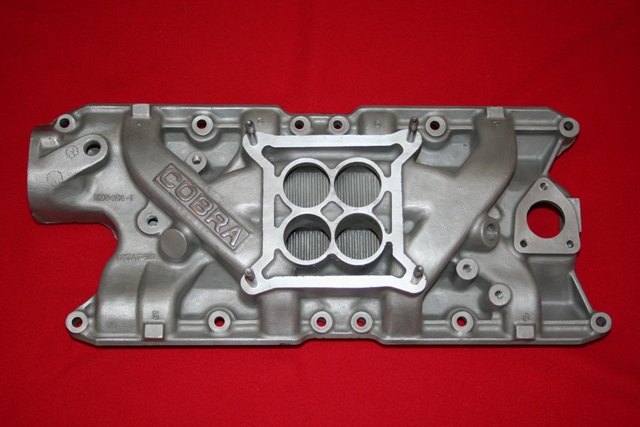
There were also 2-4V manifolds with:
Edelbrock F4B logo (two places).
COBRA text.
SHELBY text.
A raised flat pad with nothing on it.
At least those are the ones I know about.
I have seen a few of the intakes as shown in the original post. I have seen holes drilled somewhere to add a PCV system fitting in intakes without bosses for the purpose.
Making additional versions must not have been a big project in the 1960s.
Holman-Moody bird shaped logo.
A raised flat rectangular pad with nothing on it. (Shelby American factory picture.)
A raised flat pad as above with a COBRA transfer applied (Shelby American magazine ad.)
COBRA text as shown below.
TIGER text.
A raised flat pad with round ended and nothing on it.
MOON text.
At least those are the ones I know about.
There were also 2-4V manifolds with:
Edelbrock F4B logo (two places).
COBRA text.
SHELBY text.
A raised flat pad with nothing on it.
At least those are the ones I know about.
I have seen a few of the intakes as shown in the original post. I have seen holes drilled somewhere to add a PCV system fitting in intakes without bosses for the purpose.
Making additional versions must not have been a big project in the 1960s.
#7
SAAC Forum Discussion Area / Re: 1965 gt350r prototype development unidentified tire
March 12, 2026, 10:55:05 AM
BLUE STREAK STOCK CAR SPECIAL 6.50/6.70-15 tires were common as front tires in Shelby team race Cobras on and used by SFMR002 during the track session covered by Sports Car Graphic. The left rear wheel on the car in one picture was an American Racing drag race wheel for Cobras with the spline drive adapter and hat removed but retaining the chromium plated lug nuts left from the Cobra assembly. I reverse engineered the lug nuts and captured washers into drawings for the car's owner so he knew what to look for.)
I kept a some of the research material from helping with details of SFM5R002's restoration. SFM5R002 had quite a few parts from the Cobra department that track day including a 1964 type five bolt HP289 4V race engine and experimental Holley Custom Shop 1964 made prototype R-3259 700 c.f.m. carburetor. Several of us identified components in picture previously published and not published and helped come up with all the period and or Cobra roadster parts required. The mechanical tachometer drive and cable, also like 427 Cobra CSX3002 used early, were adapted from a tractor application and new old stock parts were tough to find. (SFM5S003 had an oil pressure gauge form a engine powered lift truck like Shelby American used. It took me a long time to figure out which exact model of lift truck and which exact model of oil pressure gauge was required. After that, I found a gauge for the owner to buy in a few days.)
Side Bar: Shelby American had access to every type of tire Goodyear Tire and Rubber Company made and used models made in England and the U.S.A. The size, type, and rubber compounds they chose for a car, driver, or event could be anything in stock that the rules allowed sizes of wheels wise.
I kept a some of the research material from helping with details of SFM5R002's restoration. SFM5R002 had quite a few parts from the Cobra department that track day including a 1964 type five bolt HP289 4V race engine and experimental Holley Custom Shop 1964 made prototype R-3259 700 c.f.m. carburetor. Several of us identified components in picture previously published and not published and helped come up with all the period and or Cobra roadster parts required. The mechanical tachometer drive and cable, also like 427 Cobra CSX3002 used early, were adapted from a tractor application and new old stock parts were tough to find. (SFM5S003 had an oil pressure gauge form a engine powered lift truck like Shelby American used. It took me a long time to figure out which exact model of lift truck and which exact model of oil pressure gauge was required. After that, I found a gauge for the owner to buy in a few days.)
Side Bar: Shelby American had access to every type of tire Goodyear Tire and Rubber Company made and used models made in England and the U.S.A. The size, type, and rubber compounds they chose for a car, driver, or event could be anything in stock that the rules allowed sizes of wheels wise.
#8
SAAC Forum Discussion Area / Re: Another version?
January 25, 2026, 12:48:35 PM
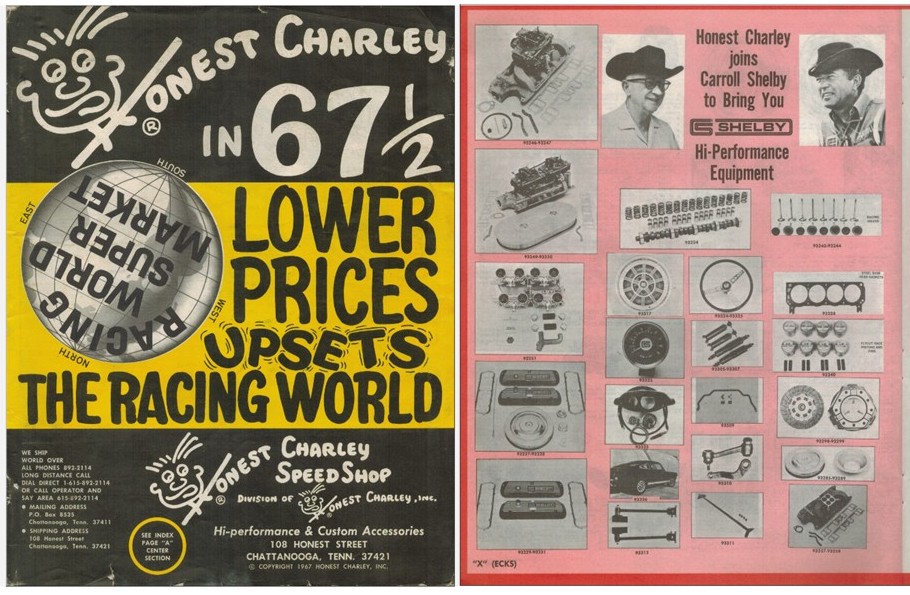
Just as a SHELBY lettered time frame reference, the 1967½ Honest Charley catalog. I do not know if the catalog had a publishing date in it or not.
#9
CSX 2000 Series / Re: CSX2000 series roadster with sunburst wheels?
January 18, 2026, 05:39:16 PM
One of the older Registries shows CSX2210 with that kind of wheel. Big red book back in the 1990s? Page 160.
#10
CSX 2000 Series / Inner Tube Valve Stem Caps
November 10, 2025, 01:27:13 PM
Instead of high jacking the racing stem caps for sale thread,
https://www.saac.com/forum/index.php?topic=30790.0
I moved my comments over to the CSX2000 Series car section.
Cobra wise, street tires, black plastic caps were standard. That said, from the first production Cobra to the last customers could and did at times order race tires for street use. The whole topic of Cobras and original tires is very complicated. There were multiple street and multiple race tires made in England or America, while most were made in the U.S.A.
Valve stem caps were a Goodyear Tire and Rubber Company detail. Caps came with inner tubes and Cobras street and race, wire wheel or magnesium wheel, used inner tubes. Goodyear racing inner tubes were specifically marked heavy duty models and came with military specification metal caps with internal seal. You will see these caps in new race car pictures of Cobras and other Shelby American prepared racers. We find them in low mile unrestored Cobra tire and wheel sets when race tires were included. They were widely used in civilian and military aviation inner tubes. In the 1970s and later I occasionally found the same model of Scharder® cap used in industrial hydraulic accumulator assemblies for high pressure nitrogen gas bladders. In the Schrader brand I was aware of the MADE IN U.S.A. marked caps connected with Cobras. A very knowledgeable historian told me that when GT40s received British made inner tubes during construction, there was a MADE IN ENGLAND marked version of the metal cap we are discussing. I have not had one of those in hand to study.
What valve stem caps were used on the Goodyear brand G8® tires used as standard equipment in Cobras before the middle of the CSX2101-CSX2200 contract, I have no idea.
Decades ago I obtained the entire spare wheel with a 7.35x15 low profile (thinks 65 series) speed rated American made Goodyear 7.35X15 3•T POWER CUSHION tire (see end note) still mounted. The early 1964 model Cobra was purchased with racing in mind and was said to have been converted to a racer immediately. The spare wheel got set aside for decades until I obtained it. It is the only original Cobra wire wheel and tire set I have had access to that MIGHT never had its air stem cap removed until I removed it for a picture session. Not a surprise really, it had a Schrader® brand black plastic cap on the valve stem. (Side Bar: A vendor has been selling new old stock ones like it on eBay® recently.) When Dave Riley and Steven Juliano recommissioned CSX2416, Steven traded me out of the spare wheel assembly for that car. Before it left, I took a picture of the balance weight on the assembly. Right or wrong, with only mint condition spare tire sample to go by, I obtained some new old stock Schrader black caps for our cars in case they ever get reworked. One cap goes with the one new old stock 1964-65 Cobra tire I found decades ago.
End note: There were three slightly different drawings for three slightly different molds used in two different tire manufacturing plants in two different states to make these special tires. There was also a British made version that showed up very late near the end of Cobra production.
https://www.saac.com/forum/index.php?topic=30790.0
I moved my comments over to the CSX2000 Series car section.
Cobra wise, street tires, black plastic caps were standard. That said, from the first production Cobra to the last customers could and did at times order race tires for street use. The whole topic of Cobras and original tires is very complicated. There were multiple street and multiple race tires made in England or America, while most were made in the U.S.A.
Valve stem caps were a Goodyear Tire and Rubber Company detail. Caps came with inner tubes and Cobras street and race, wire wheel or magnesium wheel, used inner tubes. Goodyear racing inner tubes were specifically marked heavy duty models and came with military specification metal caps with internal seal. You will see these caps in new race car pictures of Cobras and other Shelby American prepared racers. We find them in low mile unrestored Cobra tire and wheel sets when race tires were included. They were widely used in civilian and military aviation inner tubes. In the 1970s and later I occasionally found the same model of Scharder® cap used in industrial hydraulic accumulator assemblies for high pressure nitrogen gas bladders. In the Schrader brand I was aware of the MADE IN U.S.A. marked caps connected with Cobras. A very knowledgeable historian told me that when GT40s received British made inner tubes during construction, there was a MADE IN ENGLAND marked version of the metal cap we are discussing. I have not had one of those in hand to study.
What valve stem caps were used on the Goodyear brand G8® tires used as standard equipment in Cobras before the middle of the CSX2101-CSX2200 contract, I have no idea.
Decades ago I obtained the entire spare wheel with a 7.35x15 low profile (thinks 65 series) speed rated American made Goodyear 7.35X15 3•T POWER CUSHION tire (see end note) still mounted. The early 1964 model Cobra was purchased with racing in mind and was said to have been converted to a racer immediately. The spare wheel got set aside for decades until I obtained it. It is the only original Cobra wire wheel and tire set I have had access to that MIGHT never had its air stem cap removed until I removed it for a picture session. Not a surprise really, it had a Schrader® brand black plastic cap on the valve stem. (Side Bar: A vendor has been selling new old stock ones like it on eBay® recently.) When Dave Riley and Steven Juliano recommissioned CSX2416, Steven traded me out of the spare wheel assembly for that car. Before it left, I took a picture of the balance weight on the assembly. Right or wrong, with only mint condition spare tire sample to go by, I obtained some new old stock Schrader black caps for our cars in case they ever get reworked. One cap goes with the one new old stock 1964-65 Cobra tire I found decades ago.
End note: There were three slightly different drawings for three slightly different molds used in two different tire manufacturing plants in two different states to make these special tires. There was also a British made version that showed up very late near the end of Cobra production.
#12
Up For Auction / Re: CSX2227 - Hank Williams Cobra - RM Sotheby Monterey 2024
August 30, 2025, 10:12:38 AMQuote from: Speed Six on August 30, 2025, 03:02:44 AMSorry for bringing this older thread up again - but are those Wheels still available (center lock Torques for standard hub) ?
Originals made by American Racing Equipment in cast magnesium, no. They have been obsolete multiple decades now. The 6" wide Cobra only front wheels have been obsolete since Shelby American shut down in California long ago.
#13
Shelby American History / Re: Coralsnake Updates
July 15, 2025, 08:52:50 AM
Great information, much appreciated.
Dan
Dan
#14
Concours Talk / Re: 1965 PRESTOLITE BATTERY OEM
June 25, 2025, 12:13:35 PM
THE ELECTRIC AUTOLITE COMPANY® created or purchased the Prest-O-Lite®, Prestolite®, Auto-Lite®, and Autolite® brand names over a few decades prior to 1962. The Ford Motor Company purchased the Autolite brand name and selected business operations mid-1962.
The 1965 MUSTANG GT350 was not the first Shelby car to use leftover AUTOLITE batteries. Starting with approximately new Cobra CSX2117 during 1963 a 1950s design white and black plastic case model was used in new Cobras. The orientation of post was opposite of that of batteries used in multiple Fords.
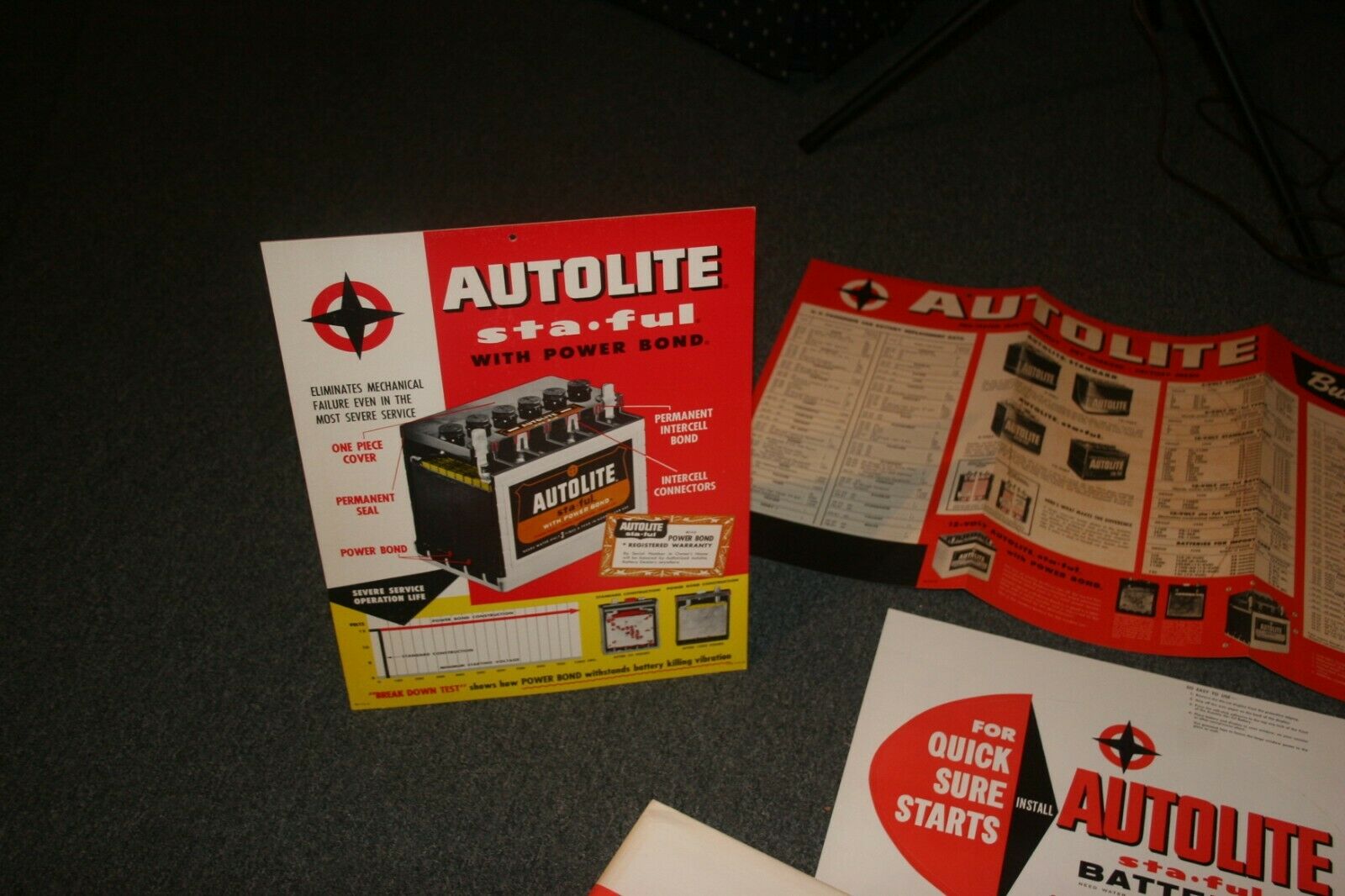
Battery for a Cobra sitting on the floor at Shelby American.
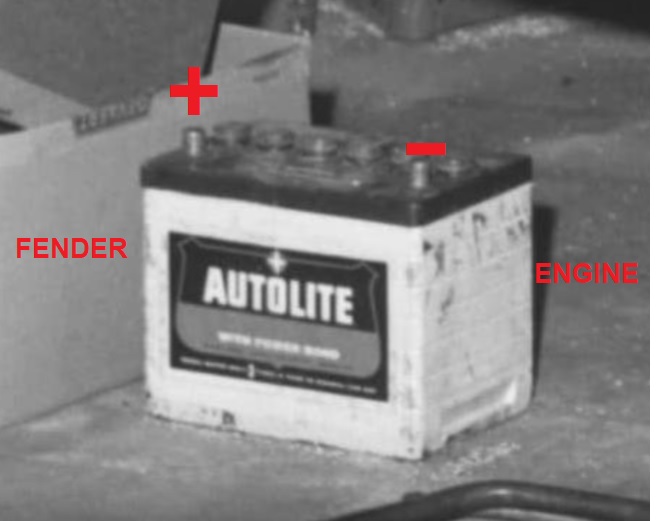
I have seen a picture of them in a new 1966 Ford sponsored drag race car too.
The 1965 MUSTANG GT350 was not the first Shelby car to use leftover AUTOLITE batteries. Starting with approximately new Cobra CSX2117 during 1963 a 1950s design white and black plastic case model was used in new Cobras. The orientation of post was opposite of that of batteries used in multiple Fords.
Battery for a Cobra sitting on the floor at Shelby American.
I have seen a picture of them in a new 1966 Ford sponsored drag race car too.